


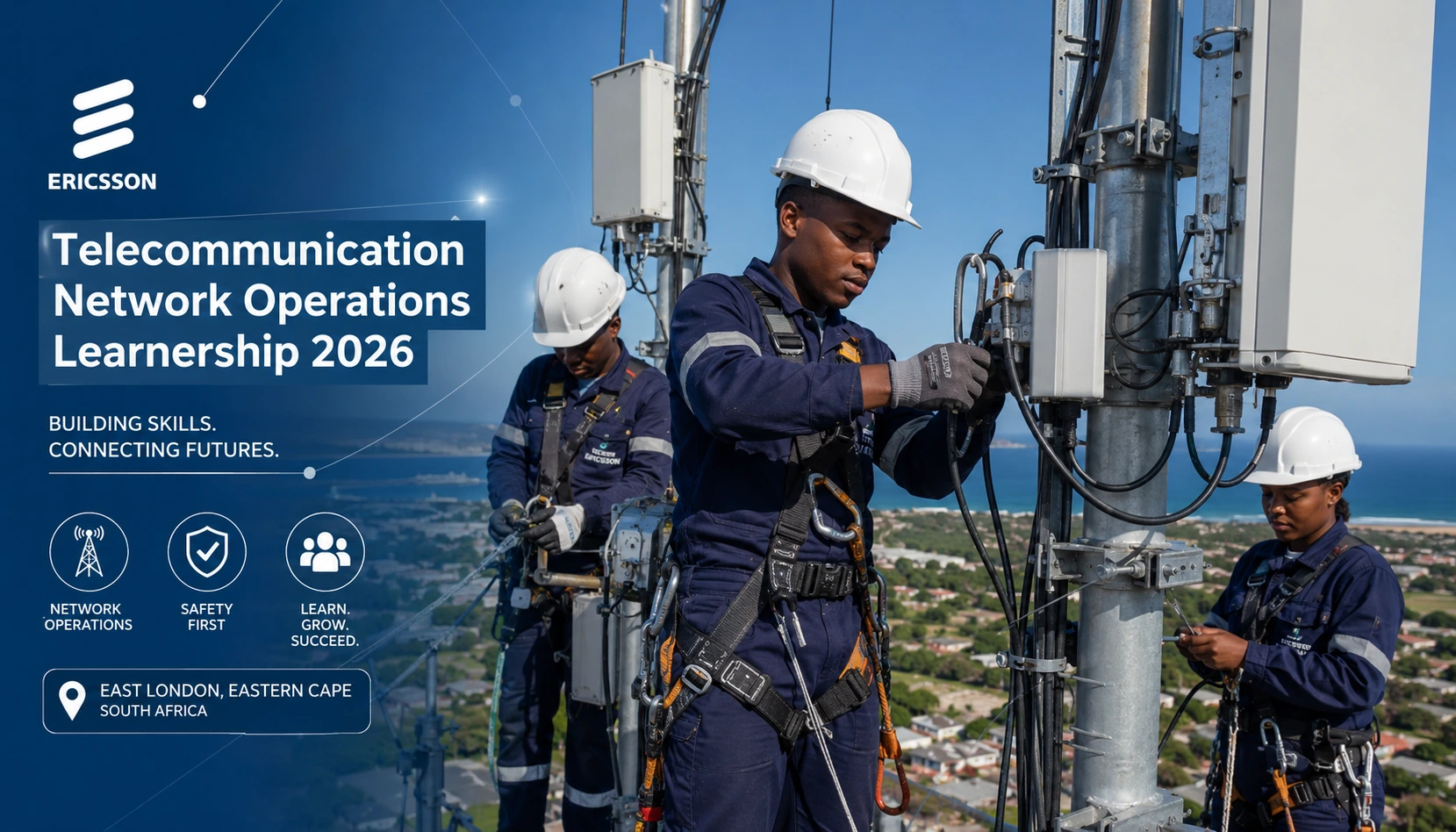
Explore the Ericsson Telecommunication Network Operations Learnership 2026 in South Africa, including requirements, skills, career impact, industry trends, and what this opportunity means for future telecom professionals.
Ericsson Telecommunication Network Operations Learnership 2026: A Strategic Entry Into South Africa’s Expanding Telecom Industry
South Africa’s telecommunications sector is entering another major phase of growth, driven by infrastructure expansion, digital transformation, and the continued demand for reliable mobile connectivity. As network providers invest heavily in tower upgrades, fiber expansion, and 5G readiness, technical skills shortages remain one of the industry’s biggest operational challenges.
That is why the Telecommunication Network Operations Learnership offered by Ericsson stands out as more than just another entry-level programme. It reflects how global telecom companies are increasingly investing in practical workforce development to prepare young South Africans for highly technical roles in network operations and field engineering.
The 12-month learnership, linked to SAQA ID 59057, NQF Level 4, combines structured learning with field-based operational experience. While many learnerships focus largely on classroom-style administration training, this programme leans heavily into real-world telecommunications infrastructure work — including tower climbing, antenna installations, cable systems, maintenance, and network support.
At a time when digital infrastructure is becoming central to economic growth, programmes like this offer a closer look at where technical employment opportunities are heading in South Africa.
ALSO READ FOR 9 Proven Ways to Turn Your Internship Into a Permanent Job in South Africa (2026 Career Guide)
Quick Facts Box-Ericsson Telecommunication Network Operations Learnership 2026
| Category | Details |
|---|---|
| Programme Name | Telecommunication Network Operations Learnership |
| Company | Ericsson |
| Location | East London, Eastern Cape, South Africa |
| Duration | 12 Months |
| Start Date | 1 June 2026 |
| End Date | 31 May 2027 |
| Positions Available | Not stated in the official advert |
| Closing Date | Not stated in the official advert |
| Reference Number | 784797 |
| Stipend | Monthly stipend offered |
| Required Gender | Not stated in the official advert |
Understanding Why Telecom Learnerships Are Becoming More Important-Ericsson Telecommunication Network Operations Learnership 2026
The telecommunications industry has changed dramatically over the past decade. What was once primarily focused on voice communication has evolved into a complex digital ecosystem supporting streaming, cloud services, online education, remote work, fintech systems, and smart technologies.
This transformation has created strong demand for operational technicians capable of maintaining and expanding network infrastructure.
The Ericsson Telecommunication Network Operations Learnership arrives during a period when South Africa continues to prioritize broadband access and network modernization. Mobile network operators are expanding coverage into underserved regions while also upgrading urban infrastructure to handle rising data traffic.
That shift requires more than software engineers and office-based IT professionals. It also requires technically trained field workers who understand:
- Fiber systems
- Microwave transmission equipment
- Antenna installations
- Tower infrastructure
- Power systems
- Network maintenance operations
One of the most notable aspects of this learnership is that it addresses this practical skills gap directly.
Unlike general business administration programmes, this opportunity exposes learners to the operational backbone of telecommunications networks — the physical systems that keep connectivity functioning daily.
The Technical Nature of the Ericsson Learnership-Ericsson Telecommunication Network Operations Learnership 2026
A major reason this programme stands out is the level of operational responsibility involved.
Learners are not only expected to study telecommunications concepts but also participate in physically demanding infrastructure work. This includes:
- Climbing telecommunication towers
- Installing antennas and microwave dishes
- Repairing communication equipment
- Working with fiber optic and coaxial cables
- Conducting audits and maintenance
- Supporting emergency network restorations
This practical structure reflects how telecommunications careers increasingly blend technical knowledge with field execution.
For many young South Africans entering the job market, one challenge is the lack of workplace exposure after completing Matric or TVET studies. Employers often seek candidates with hands-on experience, even for junior roles.
Ericsson’s programme appears designed to bridge that gap by placing learners directly into operational environments where they interact with real infrastructure systems.
The inclusion of tower training is particularly significant. Telecommunications tower work remains one of the most specialized areas within network operations because it requires both technical competence and strict safety compliance.
By introducing learners to these responsibilities early, the programme may improve long-term employability within the telecom sector.
Why the Eastern Cape Location Matters-Ericsson Telecommunication Network Operations Learnership 2026
Although the primary country listing references Johannesburg and Woodmead, the operational training itself is centered in East London, Eastern Cape.
This detail matters more than many applicants may initially realize.
South Africa’s telecommunications industry has historically concentrated many technical opportunities around Gauteng and Cape Town. However, infrastructure growth in provinces like the Eastern Cape has increased demand for local technical talent capable of supporting regional network operations.
Ericsson specifically notes that applicants should reside in East London and be prepared for travel across the Eastern Cape after several months of training.
This indicates that the programme likely supports broader network deployment and maintenance operations within the province.
For local applicants, that creates two important advantages: Ericsson Telecommunication Network Operations Learnership 2026
1. Regional Skills Development
The programme contributes to building technical capacity outside South Africa’s largest metropolitan centers.
2. Exposure to Real Deployment Conditions
Telecommunications infrastructure work often involves remote or outdoor environments rather than traditional office settings. Learners exposed to these conditions may gain a more realistic understanding of the industry’s operational demands.
The emphasis on weather adaptability, flexible hours, and emergency repairs further suggests that Ericsson is preparing learners for the realities of network field operations rather than simulated training environments.
The Growing Demand for Telecommunications Infrastructure Skills-Ericsson Telecommunication Network Operations Learnership 2026
The focus keyword — Telecommunication Network Operations Learnership — reflects a broader industry trend that extends far beyond one programme.
Globally, telecom operators are racing to modernize networks while supporting increased mobile usage, cloud connectivity, and IoT technologies.
In South Africa, this trend is visible through: Ericsson Telecommunication Network Operations Learnership 2026
- Expanded fiber rollouts
- Increased mobile data usage
- Ongoing 4G and 5G upgrades
- Rural connectivity initiatives
- Greater enterprise demand for stable digital infrastructure
As these projects grow, companies require workers who understand both installation and maintenance processes.
One interesting aspect of the Ericsson programme is its emphasis on multiple technical systems rather than a narrow specialization.
Learners gain exposure to:
- Ethernet standards
- Networking principles
- Cable testing
- Power systems
- Telecommunications construction
This multidisciplinary structure mirrors how modern telecom operations function in practice.
Field technicians today often work across interconnected systems instead of isolated technologies. Someone installing antennas may also need knowledge of power systems, fiber connectivity, or network troubleshooting.
That broader technical foundation can make entry-level workers more adaptable in the future labor market.
Safety and Operational Discipline as Industry Priorities
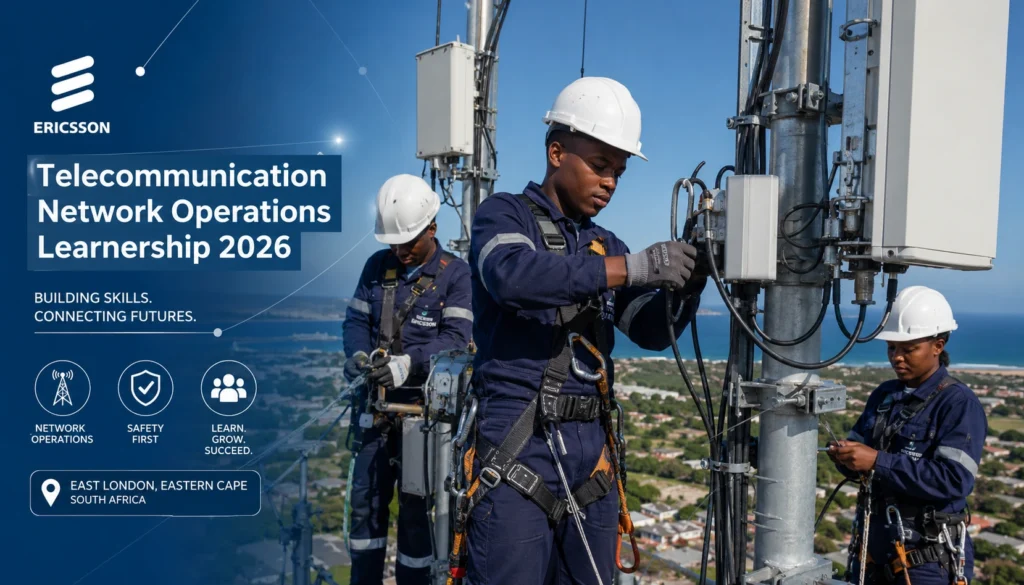
Another revealing aspect of the learnership is the repeated emphasis on safety compliance.
The job description repeatedly references: Ericsson Telecommunication Network Operations Learnership 2026
- Health and safety rules
- Quality requirements
- Safe climbing procedures
- Operational guidelines
- Compliance standards
This reflects the high-risk nature of telecommunications infrastructure work.
Unlike conventional office-based learnerships, network operations can involve: Ericsson Telecommunication Network Operations Learnership 2026
- Elevated structures
- Electrical systems
- Heavy equipment
- Outdoor weather exposure
- Emergency repair situations
For global telecom companies like Ericsson, operational discipline is not simply a recommendation — it is essential to maintaining infrastructure reliability and workforce safety.
This focus also signals something important about employability trends.
Employers increasingly value candidates who can operate within regulated technical environments while following standardized procedures consistently.
That means soft skills like communication, teamwork, flexibility, and composure under pressure become just as important as technical knowledge.
The programme specifically highlights interpersonal communication, organizational ability, and adaptability, showing that telecommunications careers now demand both technical competence and operational professionalism.
How This Learnership Aligns With South Africa’s Youth Employment Challenges
South Africa continues to face significant youth unemployment pressures, particularly among graduates and Matriculants struggling to gain practical workplace exposure.
Many young job seekers possess academic qualifications but lack industry-specific operational experience.
The Ericsson Telecommunication Network Operations Learnership attempts to address that challenge through experiential learning.
Importantly, the programme targets:
- Matriculants with technical backgrounds
- TVET students
- ICT learners
- University of Technology graduates with networking-related qualifications
This creates a pathway for technically inclined candidates who may not yet have formal industry experience.
The inclusion of a monthly stipend is also significant, even though the exact amount is not publicly stated.
Stipends help reduce financial barriers that often prevent unemployed youth from participating in full-time skills programmes.
At the same time, the operational intensity of the learnership suggests that successful applicants will need genuine commitment rather than passive participation.
Telecommunications infrastructure work is demanding, physically active, and often unpredictable.
That reality may discourage some applicants, but it can also create stronger long-term career opportunities for candidates willing to adapt to technical field environments.
What This Means Going Forward-Ericsson Telecommunication Network Operations Learnership 2026
The Ericsson Telecommunication Network Operations Learnership offers insight into where South Africa’s digital economy is heading.
As infrastructure investment accelerates, the country will likely see growing demand for workers capable of supporting:
- Network deployment
- Fiber expansion
- Telecommunications maintenance
- Tower infrastructure operations
- Technical field services
Programmes like this suggest that future employment growth may increasingly favor candidates with applied technical skills rather than purely theoretical qualifications.
The learnership also highlights a broader shift in workforce development strategies.
Instead of relying solely on classroom education, companies are integrating real operational experience into training models. This approach benefits both employers and learners because it shortens the transition between education and productive employment.
For South Africa’s telecommunications sector, that could become increasingly important as network complexity expands.
The rise of smart technologies, connected systems, and high-capacity data infrastructure means the country will need more technically trained professionals capable of maintaining reliable connectivity.
Learners who complete programmes like this may eventually progress into roles such as:
- Network technician
- Field operations specialist
- Fiber technician
- Telecommunications rigger
- Infrastructure maintenance technician
- Network support engineer
The long-term value of the learnership may therefore extend beyond the initial 12-month programme itself.
APPLY HERE
FAQs-Ericsson Telecommunication Network Operations Learnership 2026
Who can apply for the Ericsson Telecommunication Network Operations Learnership?
Applicants with Matric, especially technical subjects, as well as TVET or University of Technology students with ICT, networking, low voltage, telecom, or digital electronics qualifications may apply.
Does the learnership include practical field experience?
Yes. The programme includes hands-on operational work such as tower climbing, antenna installation, cable maintenance, and telecommunications infrastructure support.
Conclusion-Ericsson Telecommunication Network Operations Learnership 2026
The Ericsson Telecommunication Network Operations Learnership represents more than a standard training opportunity. It reflects how South Africa’s telecommunications industry is evolving toward practical, infrastructure-focused workforce development.
With increasing investment in network expansion and digital connectivity, technical operational skills are becoming more valuable across the telecommunications sector. This programme offers learners exposure to the realities of network operations while building both technical and professional capabilities.
Although the work environment may be demanding, the learnership provides meaningful industry experience that could strengthen long-term employability within one of the country’s most important digital industries.





Leave a Reply