

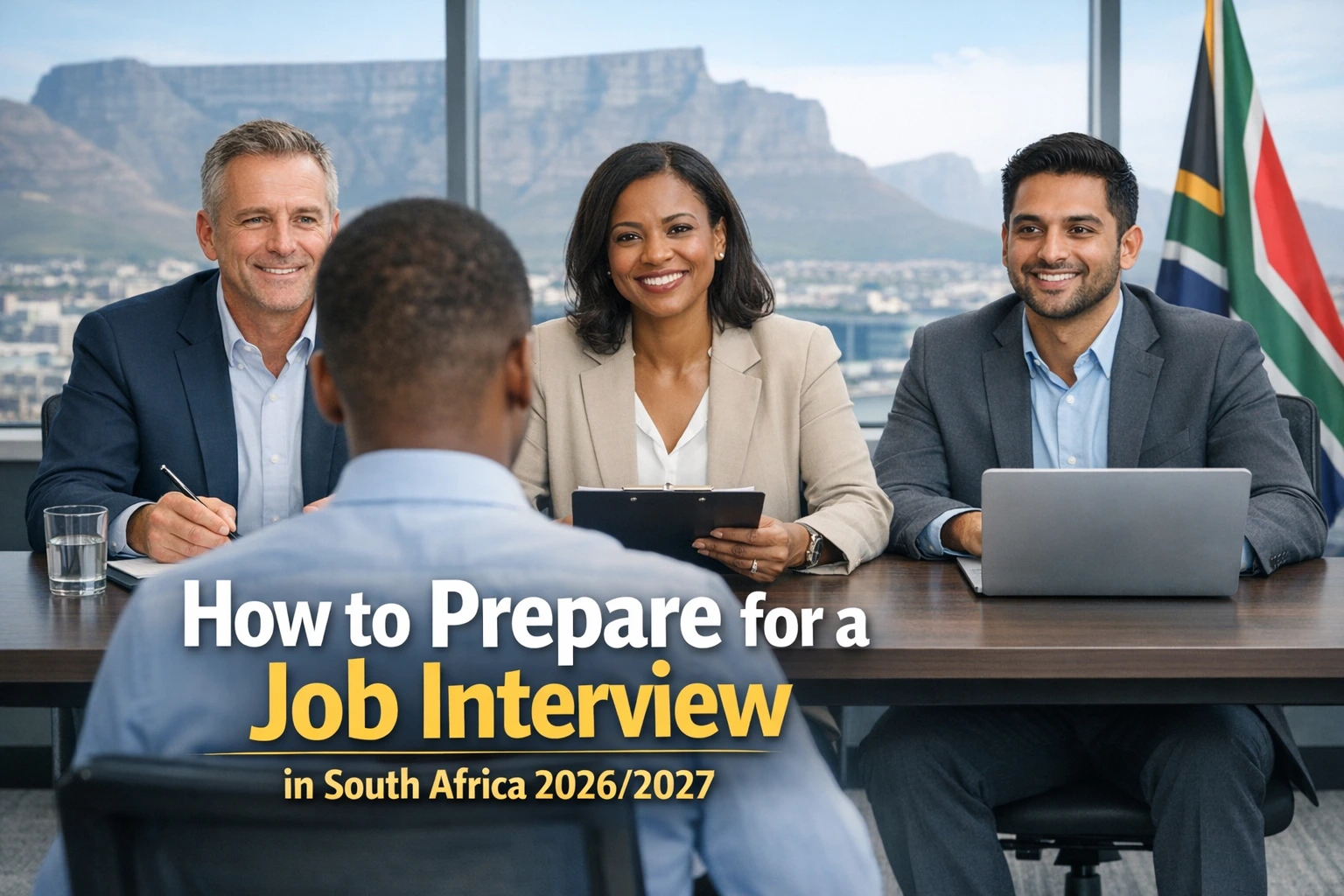
Learn how to prepare for a job interview in South Africa 2026/2027 with practical tips, documents to bring, and common interview questions.
Job interviews can feel stressful, especially when opportunities are limited and competition is high. For many South Africans entering the job market in 2026 and 2027, preparing properly for an interview could make the difference between getting the job or missing the opportunity.
This guide is for job seekers, graduates, and professionals who want practical steps to prepare for interviews in today’s changing job market. Understanding what employers expect — and how to present yourself — can significantly improve your chances of success.
While every interview is different, the fundamentals of preparation remain the same.
ALSO APPLY FOR Artisan Mechanical Job at Necsa North West 2026
Understand the Company Before the Interview-How to Prepare for a Job Interview in South Africa
One of the most common mistakes job seekers make is arriving at an interview without researching the company.
Employers expect candidates to have a basic understanding of the organisation they want to join. This includes knowing what the company does, the services it offers, and its general reputation in the industry.
For example, if you are applying for a position at a large company like Shoprite Holdings or Standard Bank Group, interviewers may ask why you want to work there specifically.
Simple preparation can help you answer confidently. Before your interview:
- Visit the company’s website
- Read about their services or products
- Check recent news or announcements
- Understand the role you applied for
This preparation shows interviewers that you are genuinely interested in the position rather than applying randomly.
Prepare Answers to Common Interview Questions-How to Prepare for a Job Interview in South Africa
Many interview questions appear repeatedly across industries. Practising answers in advance can help reduce nervousness during the interview.
Some common questions employers ask include:
- Tell us about yourself
- Why do you want this job?
- What are your strengths and weaknesses?
- Why should we hire you?
- Where do you see yourself in five years?
The goal is not to memorise scripted answers but to prepare clear and honest responses.
For example, when answering “Tell us about yourself,” focus on your education, skills, and work experience relevant to the job.
Job preparation resources from organisations such as the Department of Employment and Labour also encourage candidates to practise interview responses before attending interviews.
Even practising with a friend or family member can help improve confidence.
ALSO APPLY FOR VKB Picker Job 2026 in Bethlehem: Inside the VKB Distribution Centre Opportunity
Dress Professionally and Arrive Early-How to Prepare for a Job Interview in South Africa
First impressions matter more than many people realise.
In South Africa’s professional environment, employers usually expect candidates to dress neatly and professionally, even if the job itself is not office-based.
This does not necessarily mean wearing expensive clothing. Clean, simple, and well-presented outfits are usually sufficient.
For example:
- A button shirt or blouse
- Formal trousers or a modest skirt
- Clean shoes
- Minimal accessories
Arriving early is equally important. Ideally, you should arrive 10–15 minutes before the interview time.
Late arrivals can create a negative impression before the interview even begins.
If the interview location is unfamiliar, consider visiting the area beforehand or checking directions using a map application.
Bring the Right Documents
Many job seekers forget important documents when attending interviews.
Always bring copies of the documents employers may need to review.
Common documents include:
- Your Curriculum Vitae (CV)
- Certified copy of your ID
- Copies of qualifications or certificates
- Reference letters (if available)
Some employers may also ask candidates to complete forms during the interview process.
Having organised documents in a folder can help you appear more prepared and professional.
Show Confidence and Communicate Clearly-How to Prepare for a Job Interview in South Africa
Confidence does not mean pretending to know everything. It means speaking honestly and clearly about your abilities.
During interviews, employers often look for candidates who can communicate well with colleagues, customers, and supervisors.
Some simple communication tips include:
- Maintain eye contact when speaking
- Listen carefully to questions before answering
- Speak clearly and avoid rushing your words
- Be honest about your experience
Even if you do not know the answer to a question, it is usually better to admit it respectfully rather than guessing incorrectly.
According to career guidance from the International Labour Organization, employers often value attitude and willingness to learn as much as technical skills.
Ask Questions at the End of the Interview
Many interviews end with the question: “Do you have any questions for us?”
Some candidates simply say no, but asking thoughtful questions can actually leave a positive impression.
You could ask questions such as:
- What does a typical day in this role look like?
- What skills are most important for success in this position?
- What are the next steps in the hiring process?
Questions like these show interest and engagement.
They also help you understand whether the job is the right fit for you.
The Reality of Job Interviews in South Africa
It is important to acknowledge that finding employment can be difficult in today’s economy. Many candidates apply for the same positions, and employers often receive hundreds of applications.
This means that not every interview will result in a job offer.
However, each interview provides valuable experience. The more interviews you attend, the more confident and prepared you become.
Job seekers should also continue improving their skills through training, short courses, and work experience whenever possible.
FAQs
How long should I prepare for a job interview?
Ideally, start preparing as soon as you receive the interview invitation. Even one or two days of preparation can make a big difference.
What if I feel nervous during the interview?
Feeling nervous is normal. Take a deep breath, listen carefully to each question, and answer slowly.
Is it okay to bring notes to an interview?
Yes. A small notebook with key points or questions can be helpful.
Should I follow up after the interview?
Sending a short follow-up email thanking the interviewer for their time can show professionalism.
What if I don’t get the job?
Use the experience as a learning opportunity. Each interview helps improve your confidence and preparation for future opportunities.
Charles
Specializes in sourcing, reviewing and publishing verified jobs, internships and learnerships across South Africa. With a strong focus on accuracy, transparency and scam awareness, His work is dedicated to helping young South Africans access reliable opportunity information without confusion or misinformation.




Leave a Reply