

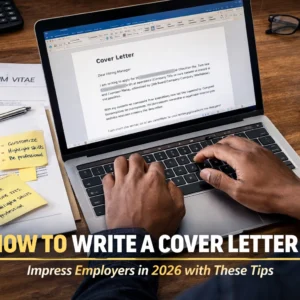
Learn how to write a cover letter that stands out in 2026. Discover expert tips, structure, examples, and mistakes to avoid for job success.
How to Write a Cover Letter (2026 Guide)
Introduction: Why Cover Letters Still Matter in 2026 || How to Write a Cover Letter
In an era dominated by digital applications, AI screening, and one-click job submissions, many job seekers assume cover letters are outdated. That assumption is costly. In reality, knowing how to write a cover letter remains one of the most effective ways to differentiate yourself—especially in competitive job markets like South Africa.
Employers increasingly use cover letters to assess communication skills, motivation, and cultural fit—factors that a CV alone cannot fully convey. With hiring processes becoming more selective in 2026, a well-crafted cover letter can be the deciding factor between getting shortlisted or ignored.
ALSO READ How to Complete a Z83 Form: 7 Critical Steps Most Applicants Get Wrong — And How to Fix Them Fast
ALSO APPLY FOR Code 14 Truck Driver Job 2026: Urgent Cape Town Opportunity
Understanding the Purpose of a Cover Letter || How to Write a Cover Letter
A cover letter is not a repetition of your CV. It is a strategic document designed to:
- Introduce yourself professionally
- Explain why you are applying
- Highlight your most relevant skills
- Show how you add value to the company
Analytical Insight:
Recruiters typically spend less than 10 seconds scanning a CV, but a compelling cover letter can encourage them to spend more time evaluating your application.
The Structure of a Strong Cover Letter || How to Write a Cover Letter
1. Opening Paragraph: Capture Attention Immediately
The first paragraph should clearly state:
- The job you are applying for
- Where you found the vacancy
- A brief, strong reason why you are a good fit
Example: How to Write a Cover Letter
I am applying for the Administrative Assistant position advertised on your website. With strong organizational skills and experience in office administration, I am confident in my ability to contribute effectively to your team.
Insight: How to Write a Cover Letter
Avoid generic openings like “I am writing to apply…” without context. Specificity shows effort and intent.
2. Middle Paragraph: Showcase Your Value
This is the most important section. Focus on:
- Relevant experience
- Key achievements
- Skills aligned with the job
Expert Tip:
Use evidence-based statements instead of vague claims.
Instead of:
I am a hard worker
Write:
I successfully managed daily administrative operations, improving office efficiency and reducing filing errors.
Trend:
Employers in 2026 prefer candidates who demonstrate measurable impact, not just responsibilities.
3. Alignment With the Company
A strong cover letter shows that you understand the employer.
Include:
- Why you want to work for that company
- How your values align with theirs
Example:
I am particularly drawn to your organization’s commitment to service excellence, which aligns with my passion for delivering high-quality customer support.
Insight:
Generic applications are easy to spot—and often rejected.
4. Closing Paragraph: Clear and Confident
End your letter by:
- Reaffirming your interest
- Requesting an opportunity to discuss further
- Thanking the employer
Example:
I would welcome the opportunity to discuss how my skills can contribute to your organization. Thank you for considering my application.
Common Mistakes That Weaken Cover Letters

Understanding how to write a cover letter also means avoiding critical errors.
Frequent Mistakes:
- Copy-pasting the same letter for every job
- Repeating your CV word-for-word
- Using informal language
- Making spelling or grammar mistakes
Analytical Insight:
These mistakes signal lack of effort and professionalism, which can immediately disqualify candidates.
Strategic Tips to Make Your Cover Letter Stand Out
1. Customize Every Application
Tailor your letter to each job. Even small adjustments can make a big difference.
2. Keep It Concise
Aim for one page. Recruiters prefer clarity over length.
3. Use a Professional Tone
Maintain a balance between confidence and humility.
4. Focus on Value, Not Just Need
Instead of saying:
I need this job
Show:
How you can help the company succeed
Example of a Simple Cover Letter
Writing
Dear Hiring Manager,
I am applying for the General Worker position at your company as advertised. With experience in warehouse operations and a strong work ethic, I am confident in my ability to contribute effectively to your team.
In my previous role, I was responsible for handling stock, maintaining cleanliness, and supporting daily operations. I consistently ensured tasks were completed efficiently and according to company standards.
I am eager to bring my skills and dedication to your organization and contribute to its continued success. I would appreciate the opportunity to discuss my application further.
Thank you for your time and consideration.
Sincerely,
[Your Name]
The Role of Cover Letters in Modern Hiring Trends
In 2026, hiring is increasingly influenced by:
- AI screening tools
- Skills-based recruitment
- Employer branding
Insight:
While some companies rely heavily on automated systems, many still use cover letters to assess human qualities like motivation and communication.
This creates an opportunity: candidates who write strong cover letters can stand out in an otherwise automated process.
What This Means Going Forward
The importance of knowing how to write a cover letter is unlikely to decline. Instead, it is evolving.
We can expect:
- Greater emphasis on personalization
- Integration with digital application platforms
- Increased use in competitive roles
For job seekers, this means developing strong writing skills will remain a valuable asset. Those who can clearly communicate their value will continue to have an advantage.
FAQs
1. Is a cover letter always required?
Not always, but submitting one—even when optional—can significantly improve your chances of getting noticed.
2. How long should a cover letter be?
Ideally, one page with 3–4 concise paragraphs. Keep it clear and focused.
Conclusion
A cover letter is more than just a formality—it is a powerful tool that allows you to present yourself beyond your CV. Understanding how to write a cover letter effectively can significantly improve your chances of securing job opportunities in a competitive market.
By focusing on clarity, relevance, and value, you position yourself as a strong and serious candidate. In 2026, where competition is high and attention spans are short, a well-written cover letter remains one of the smartest way to stand out.







Leave a Reply