

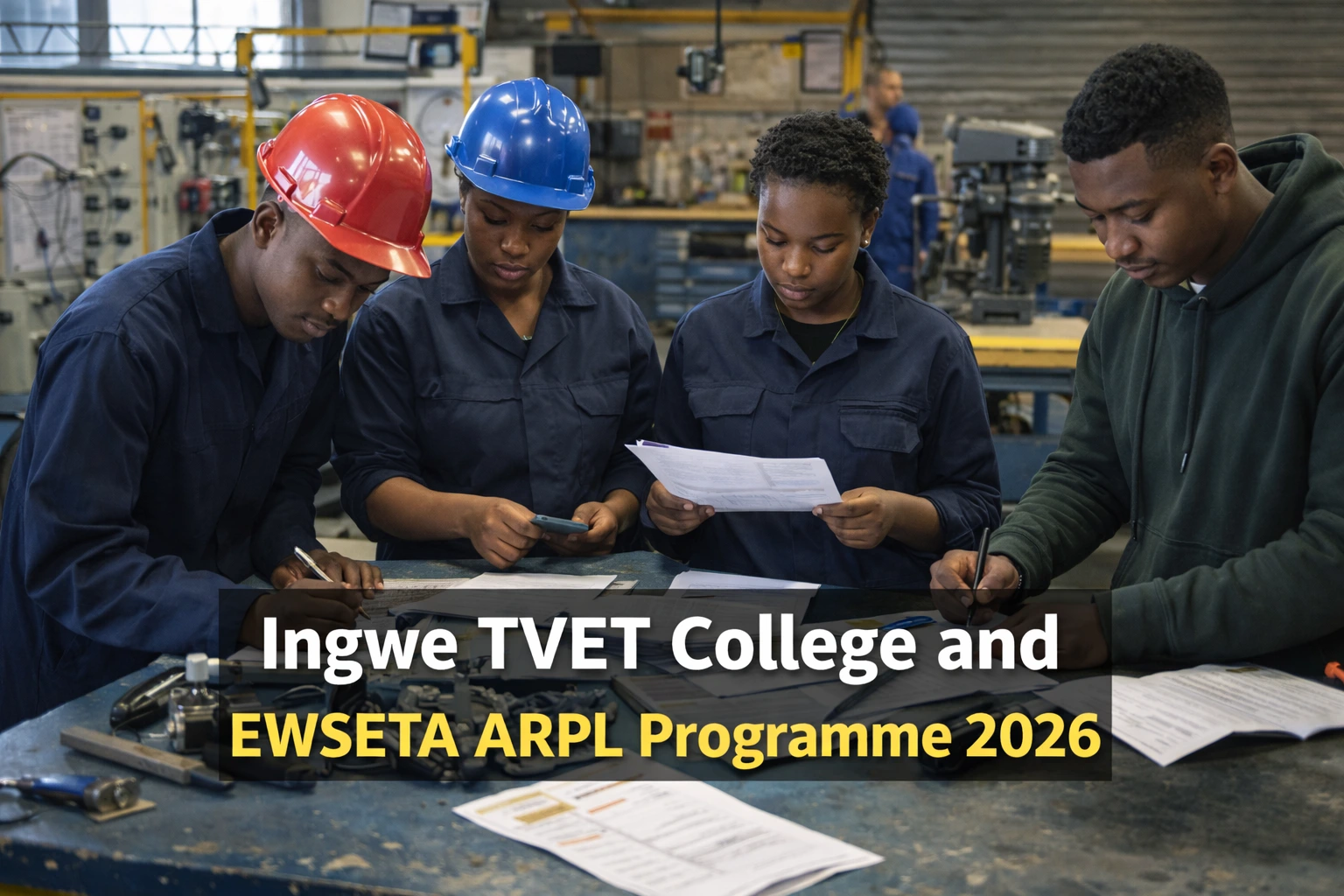
Apply for the Ingwe TVET College and EWSETA ARPL Programme 2026. Turn your work experience into a recognised artisan qualification before 10 April 2026.
Introduction: Why This Ingwe TVET College and EWSETA ARPL Programme Matters Now
The Ingwe TVET College and EWSETA ARPL Programme 2026 arrives at a critical moment in South Africa’s skills development landscape. Across industries, thousands of workers are performing artisan-level tasks daily—yet remain locked out of better opportunities simply because they lack formal certification.
This gap between practical experience and official recognition has long limited career growth, wages, and mobility. Now, with the 10 April 2026 deadline approaching, this programme offers a rare chance to bridge that divide.
Unlike traditional training routes, this initiative focuses on what candidates already know. It recognises years of hands-on work and translates it into formal pathways toward artisan status. For many, this is not just an opportunity—it is a turning point.
ALSO APPLY FOR Ampath Clinical Pathology Job 2026: 6 Powerful Reasons This Role Could Transform Your Healthcare Career
ALSO APPLY FOR Security Guard: Guarding Services EMPD19235R
Quick Facts Box About Ingwe TVET College and EWSETA ARPL Programme
- Closing Date: 10 April 2026
- Location: Not stated in the official advert
- Duration: Not stated in the official advert
- Positions Available: 103
- Reference Number: Not stated in the official advert
- Stipend: Not stated in the official advert
- Required Gender: Not stated in the official advert
- Name of the Company: Ingwe TVET College and EWSETA
Understanding the Ingwe TVET College and EWSETA ARPL Programme 2026
The Ingwe TVET College and EWSETA ARPL Programme 2026 is built on the principle of Recognition of Prior Learning (ARPL). This approach evaluates skills gained through real work experience rather than formal classroom education.
For many South Africans, this distinction is crucial.
Traditional education pathways often require years of study and structured apprenticeships. In contrast, ARPL acknowledges that learning also happens on the job—through repetition, problem-solving, and practical exposure.
This programme allows experienced workers to:
- Have their skills formally assessed
- Align their experience with national occupational standards
- Move closer to trade testing and certification
In effect, it transforms informal expertise into recognised qualifications, making it easier to access better job opportunities.
Why the Skills Recognition Gap Still Exists- Ingwe TVET College and EWSETA ARPL Programme
Despite years of policy focus on skills development, a significant portion of South Africa’s workforce remains under-recognised.
Many workers begin as assistants or helpers in industries like construction, manufacturing, or maintenance. Over time, they develop strong technical abilities. However, without formal certification, their career progression often stalls.
This creates a structural challenge:
- Employers rely on experienced workers
- Workers gain skills informally
- Yet formal recognition remains out of reach
The Ingwe TVET College and EWSETA ARPL Programme 2026 directly addresses this issue. By validating real-world experience, it helps close the gap between ability and accreditation.
From an economic perspective, this is significant. A more formally recognised workforce can improve productivity, safety standards, and overall industry performance.
Trade Pathways: Where Experience Meets Opportunity
One of the defining features of the Ingwe TVET College and EWSETA ARPL Programme 2026 is its focus on high-demand technical trades.
Electrical Pathway
This stream targets individuals with experience in installations, wiring, and maintenance. With increasing demand for electrical services across residential and industrial sectors, certified electricians remain highly sought after.
Motor Mechanics Pathway
Candidates with experience in vehicle servicing, diagnostics, and repairs can benefit from this route. The automotive sector continues to require skilled technicians, particularly as vehicles become more complex.
Welding Pathway
Welding skills are essential in construction, manufacturing, and infrastructure development. This pathway supports those involved in fabrication and structural work.
Plumbing Pathway
Plumbing remains a critical service in both urban and rural development. Workers with experience in water systems and drainage can formalise their expertise through this option.
Each pathway reflects sectors where skills shortages and demand intersect, making certification especially valuable.
The Critical Role of the Service Letter
One of the most overlooked—but essential—elements of the application is the service letter.
In the context of the Ingwe TVET College and EWSETA ARPL Programme 2026, this document serves as proof of real-world experience. It must clearly outline:
- The nature of work performed
- Duration of employment
- Technical responsibilities handled
- Level of exposure to the trade
Without this evidence, even highly skilled candidates may struggle to progress through the selection process.
From an analytical standpoint, the emphasis on documentation highlights a key principle of ARPL: skills must be verifiable. Experience alone is not enough—it must be demonstrated in a structured and credible way.
Applicants who invest time in securing detailed, accurate service letters significantly improve their chances of success.
ARPL vs Traditional Apprenticeships: A Strategic Advantage
A common misconception is that ARPL and apprenticeships serve the same purpose. In reality, they address different stages of the skills journey.
Traditional apprenticeships are designed for beginners. They combine classroom learning with workplace training over several years.
ARPL, on the other hand, is designed for those who already have experience.
This distinction creates a strategic advantage:
- Faster progression: No need to start from scratch
- Cost efficiency: Less time spent in formal training
- Recognition: Immediate validation of existing skills
For experienced workers, the Ingwe TVET College and EWSETA ARPL Programme 2026 offers a more efficient route to certification compared to traditional pathways.
Access and Inclusion: Who Benefits the Most?
The programme’s structure ensures that both unemployed and employed individuals can benefit.
Out of 103 available opportunities:
- 63 are allocated to unemployed candidates
- 40 are reserved for employed beneficiaries
This balanced approach reflects an understanding of the labour market. It acknowledges that both groups face barriers to certification, albeit for different reasons.
Unemployed candidates often lack access to formal training opportunities. Employed workers, meanwhile, may lack time or resources to pursue certification.
By accommodating both, the programme promotes broader inclusion and access.
How should candidates submit for the Ingwe TVET College and EWSETA ARPL Programme 2026?
Required documents must be sent by email to wil@ingwecollege.edu.za.
Submissions should include:
- Certified ID copy
- Certified qualification
- Updated CV
- Service letter confirming industry experience
For enquiries, candidates can contact Mr Mpiti on 039 940 2142.
All submissions should be sent before 10 April 2026.
Late submissions may not be considered.
What This Means Going Forward- Ingwe TVET College and EWSETA ARPL Programme
The Ingwe TVET College and EWSETA ARPL Programme 2026 signals a broader shift in how skills are recognised in South Africa.
Looking ahead, several trends are likely to emerge:
Greater Acceptance of Alternative Learning Pathways
ARPL programmes could become more common, offering flexible routes to certification.
Increased Workforce Mobility
Certified artisans can move more easily between jobs and sectors, improving career prospects.
Higher Industry Standards
Formal recognition encourages consistency, safety, and professionalism across trades.
Stronger Economic Impact
A more skilled and certified workforce can contribute to productivity and growth.
For individuals, this means that investing in recognition today could unlock long-term opportunities tomorrow.
FAQs-Ingwe TVET College and EWSETA ARPL Programme
1. Who qualifies for the Ingwe TVET College and EWSETA ARPL Programme 2026?
Anyone with at least three years of relevant trade experience in electrical, plumbing, welding, or motor mechanics can apply.
2. What is the most important document for the application?
The service letter is critical, as it proves your work experience and technical skills in a real workplace.
Conclusion-Ingwe TVET College and EWSETA ARPL Programme
The Ingwe TVET College and EWSETA ARPL Programme 2026 offers a practical and impactful solution to one of South Africa’s most persistent workforce challenges—the lack of formal recognition for skilled workers.
With 103 opportunities available and a clear focus on real-world experience, this programme provides a direct pathway to artisan certification without requiring candidates to start over. For many, it represents a chance to finally align their qualifications with their capabilities.
As the 10 April 2026 deadline approaches, eligible candidates should act quickly, ensuring that their documentation—especially the service letter—is complete and compelling.





Leave a Reply